Skip to Content

Trinity Valley Stormwater Drainage Upgrade: Stage 1

Trinity Valley Stormwater Drainage Upgrade: Stage 1

Media gallery

Category: Stormwater drainage network

Project management

Managed by City of Norwood Payneham & St Peters

Design: Tonkin

Contractor: Bardavcol

Overview

The Trinity Valley Stormwater Drainage Upgrade involves the installation of new stormwater drainage infrastructure in the suburbs of St Morris, Trinity Gardens, Maylands, and Stepney (known collectively as the ‘Trinity Valley’).

The Project is being undertaken in four stages and is designed to:

  • reduce the risk of flooding and damage to local properties
  • increase capacity of stormwater drainage infrastructure for 1-in-100-year storm events
  • use Council reserves and streets for temporary stormwater detention.

Stage 1 

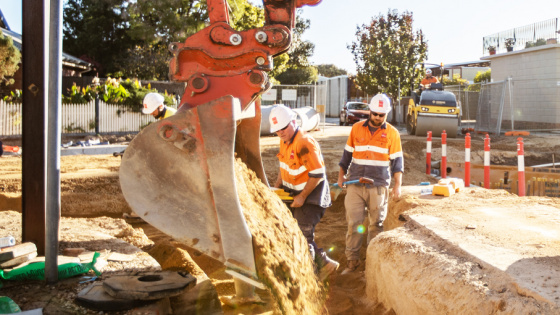
Trinity Valley Drainage Upgrade Stage 1 includes the installation of new underground infrastructure (i.e. stormwater pits and pipes) in Clifton Street, Frederick Street, Mayfair Street, Ford Street and Phillis Street. The construction work to install stormwater pipes and pits requires large trenches to be excavated in the roadway, including some alterations to existing SA Water sewer and water mains.

In addition, underground detention tanks will be installed in Cruickshank Reserve to store and gradually release stormwater during high rainfall events.

The decision to install underground detention tanks within Cruikshank Reserve, rather than an earlier proposal to install large underground culverts in Clifton Street (between Adelaide Street and Portrush Road), was informed by extensive on-site investigations, financial and constructability considerations, including impacts to existing underground services (i.e. gas, sewer, water and electricity) and traffic disruption.

For further details, please refer to the letter to residents and the map of the construction area in the Documents and Correspondence section on this page.

Funding

Stage 1 will be funded as part of the Council’s Trinity Valley Stormwater Drainage Upgrade Project.

The Federal Government is contributing $9.9 million as part of its Preparing Australian Communities Program, which targets projects that improve resilience against natural disasters. The investment is being matched dollar by dollar by the Council, resulting in a near $20 million investment to reduce the risk of flooding.

More information

For more information about the other stages of the Trinity Valley Stormwater Drainage Upgrade, visit:

Timeline

  • Design complete

    March 2026

    Complete

  • Contractor procurement

    March 2026

    In progress

  • Construction to commence

    April 2026

    Scheduled

  • Construction complete

    October 2026

    Scheduled

FAQ's

Why is the Council upgrading the stormwater drainage network

In 2019, the Council completed comprehensive City-wide floodplain mapping, identifying areas at risk of flooding. The mapping incorporated a range of future scenarios, including infill development and the continuing effects of climate change.

Following the floodplain mapping, the Council developed and endorsed a Stormwater Drainage Program, which is being implemented in stages over a 15-year period. This program includes the renewal and upgrade of the City’s stormwater infrastructure—such as pipes, culverts, inlets, and junction boxes—to ensure it meets the Council’s service level standards for effective stormwater management.

What is the Trinity Valley Stormwater Drainage Upgrade Project

The Trinity Valley drainage catchment encompasses areas within the suburbs of St Morris, Trinity Gardens, Maylands, and Stepney.

The primary objective of the Trinity Valley Stormwater Drainage Upgrade Project is to enhance flood protection for properties and dwellings against a 1 in 100-year rainfall event. This will be achieved by:

  • increasing the capacity of the stormwater infrastructure
  • utilising Council reserves as detention areas
  • reducing the volume of stormwater conveyed downstream during storm events.

The project is being delivered in four stages:

  • Stages 2 and 3 were completed in May 2024
  • Stage 4 was completed in January 2026, and involved the installation of large culverts, pipes, and pits within the roadway, road resurfacing, building of a detention basin and upgrading the St Morris Reserve
  • Stage 1 will be undertaken in 2026.

What does the Trinity Valley Stormwater Drainage Upgrade Stage 1 involve

Stage 1 will be undertaken in the suburbs of Maylands and Stepney. The works include the installation of new underground stormwater infrastructure (i.e. pits and pipes) in Clifton Street, Frederick Street, Mayfair Street, Ford Street and Phillis Street.

Underground detention tanks will be installed in Cruickshank Reserve, and the Clifton Street / Phillis Street and Clifton Street / Frederick Street roundabouts will be upgraded.

The roadways impacted by the drainage works will also be resealed.

Why is Council installing underground tanks in Cruickshank Reserve instead of culverts on Clifton St

The design of the stormwater infrastructure with the capacity required to capture and detain stormwater to minimise flooding has been extremely challenging due to the narrow local roads, existing underground infrastructure and mature street trees.

Extensive on-site investigations to identify existing underground services and gather geotechnical information was undertaken to inform the design.

The initial design, to install large underground culverts within Clifton Street (between Adelaide Street and Portrush Road), presented complex construction issues and community impacts including:

  • relocation of the main SA Water trunk sewer
  • working in close proximity to the relocated main trunk sewer and underground high voltage electricity and underneath large street trees
  • impact to Clifton Street residents given the section of Clifton Street between Adelaide Street and Portrush Road would need to be completely closed for a period of 3 to 4 months. During this time residents with properties located between Adelaide Street and Portrush Road would have no vehicular access to their properties.

Following a constructability and risk assessment of the initial design, an alternative design was proposed. The alternative design involves relocating the underground detention infrastructure from Clifton Street to Cruickshank Reserve and will include:

  • excavating a portion of the south-west section of the Reserve
  • installing precast concrete detention tanks in the ground
  • reinstating the Reserve (i.e. irrigation, turf and park furniture).

Flood modelling undertaken, indicates that the alternative design performs slightly better than the initial design and in February 2026, Council approved the alternative design to place the stormwater detention tanks in Cruickshank Reserve rather than in Clifton Street.

Why wasn’t the community consulted before Council decided to install tanks in Cruickshank Reserve

The underground stormwater detention tanks are important infrastructure to mitigate the risk of flooding of roads and private dwellings within Maylands and downstream areas.

No community consultation was undertaken as the Reserve will be reinstated to its current condition following construction. The community will be consulted in coming years should proposals to relocate the playground or undertake other enhancements to the Reserve eventuate.

What are the impacts on Cruickshank Reserve

The south-western portion of Cruickshank Reserve will be closed to the public for approximately 4 to 5 months whilst the detention tanks are installed, and the Reserve is reinstated. During this time, the playground will remain open and access to the public toilets, tennis courts and St Peters Tennis Club clubrooms will be maintained.

Seven Jacaranda trees will be required to be removed from the south-western portion of the Reserve to facilitate installation of the detention tanks. One Golden Rain Tree on the southern edge of the Reserve is also required to be removed, as it is located on the alignment of the inlet pipe from Clifton Street. An independent arborist has undertaken an assessment and confirmed that none of the trees are regulated or significant.

The reinstated soil and turf that will cover the detention tanks, will be over half a metre in depth, but will not be suitable for large trees to establish their roots. No trees will be planted in the area above the tanks. There may be the potential for shrubs and garden beds in the future, however there are no current planting proposals.

Additionally, preliminary advice has indicated that the construction works within the Reserve will not detrimentally impact the root zones of established trees on the edge of, or within, the Reserve. A comprehensive independent arborist report is currently being prepared for Council.

What are the future opportunities for Cruickshank Reserve

The reinstated open grassed area above the detention tanks will provide a zone for active leisure including picnics, parties, exercise groups and ball games.

In the future it is also a potential zone for the relocation of the playground, thereby providing an opportunity to plant additional trees on the site of the existing playground. This proposal is currently unfunded and is subject to further planning and consultation.

When will the Trinity Valley Stormwater Drainage Upgrade Stage 1 be constructed

The Project is scheduled to commence in late March 2026 and will be delivered over a period of approximately 9 months.

Who will undertake the construction work

The project will be constructed by South Australian based contractor Bardavcol Pty Ltd.

Will there be traffic restrictions in place during the works?

The construction work to install stormwater pipes and pits requires large trenches to be excavated in the roadway. Some roads will require a reduction to one-way traffic and small sections of road may be completely closed while works are undertaken, particularly when the civil works to upgrade the roundabouts are occurring.

Short-term detours will be in place to facilitate construction and ensure the safety of workers and the community is maintained at all times. Nearby residents will be notified of planned detours via letter. Please be mindful of the traffic restrictions when travelling through the area and observe onsite signage.

Will access to my property be affected?

Pedestrian access to properties will always be maintained. However, at some time during construction, access to some driveways may be temporarily restricted. If your driveway access is affected, we will contact you ahead of these works occurring.

Do I need to do anything to the stormwater system on my property?

Property owners are not required to modify their existing stormwater systems or connections to the street.

How can I learn more about the project?

You can learn more about the project by visiting our website at: www.npsp.sa.gov.au/trinity-valley-stage1

How can I receive updates on the Council’s other major projects?

To receive updates on our major projects, please subscribe: www.npsp.sa.gov.au/project/subscribe

Site Address

Clifton St, Maylands

Cost

TBA

Project Contact

Contact Michael Moshos

Contact role Project Manager, Civil

Phone 08 8366 4555

Email trinityvalley@npsp.sa.gov.au

Subscribe to receive updates on our projects

Subscribe